After nearly four years of implementing Decision 2545/QD-TTg – approving the Project on the Development of Non-Cash Payments in Vietnam for the period 2016-2020, non-cash payment activities in our country have made many positive strides.
According to the Prime Minister's assessment, although there have been many breakthroughs in recent times, the ratio of cash to total means of payment remains high compared to the target set in Decision 2545/QD-TTg.
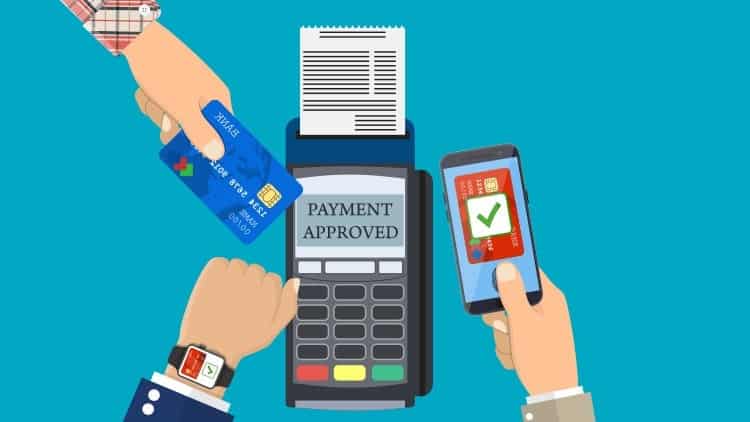
Currently, especially in rural and remote areas, the use of electronic payments in e-commerce is still low and does not match its development potential. In the healthcare and education sectors, the implementation of cashless payments is still modest. Furthermore, Crimes in the high-tech and electronic payment sectors have recently become more complex, with new and more sophisticated methods and tactics.
To further promote the development of cashless and electronic payments and achieve the objectives of Decision 2545/QD-TTg, the Prime Minister requests relevant ministries, sectors, and localities to actively implement the assigned tasks.
1. For the State Bank of Vietnam
Complete the legal corridor To promote cashless and electronic payments, and to meet the requirements for developing new payment models, products, and services. Simultaneously, to chair and coordinate with relevant ministries and agencies to submit to the Government for consideration and promulgation a Decree replacing the Decree on cashless payments before July 1, 2020.
Continue research and issue regulations within your authority or submit them to a higher authority. Implement appropriate mechanisms and policies regarding payment service fees. To encourage organizations and individuals to make cashless payments.
Instructions for completion Building and developing an automated electronic clearing system. For retail payment transactions (ACH), the service will be officially launched and deployed, with completion before December 15, 2020.
Continue research and application. Key Customer Identification (KYC) solutions using electronic methods to promote access to and use of payment services.
Strengthen work Inspection, auditing, supervision, prevention and combating money laundering and terrorist financing. In cashless payment operations, electronic payments, and payment intermediaries, ensure secure, safe, and efficient operation.
2. Ministry of Industry and Trade
Complete the task. enact mechanisms and policies to encourage Retail establishments selling goods and services that accept and use electronic payment methods; encouraging electronic payments in e-commerce before July 1, 2020.
3. Ministry of Finance
Complete connecting electronic payment infrastructure This involves linking credit institutions with the infrastructure of tax, customs, and state treasury agencies to facilitate coordinated collection of state budget revenue through electronic methods.
Expanding research on these areas solutions to support commercial banks in the process of controlling import and export payment documents and minimizing fraud risks.
Perform guidance on financial mechanisms Administrative organizations and public service units must ensure the feasibility and consistent implementation of payment of non-cash payment service fees to credit institutions and payment intermediary organizations before July 1, 2020.
4. Ministry of Health
Implement guidelines for hospitals to coordinate with credit institutions and payment intermediaries to Collect medical service fees using cashless payment methods. before July 01, 7.
5. Ministry of Education and Training
Instruct schools to coordinate with credit institutions and payment intermediaries to Collect educational service fees through cashless payment methods.
Simultaneously, proceed with building and standardizing the database, upgrading the technical infrastructure for connecting and sharing information with credit institutions and payment intermediaries to implement the collection of education service fees through electronic payment methods before July 1, 2020.
6. Ministry of Labour, Invalids and Social Affairs, Vietnam Social Insurance (VSI)
Develop and issue, within their authority, guidelines, standards, and roadmaps for standardizing data information on pensioners, social insurance beneficiaries, and social security recipients, so that information can be shared with credit institutions and payment intermediaries. Making payments of social security benefits, pensions, and social insurance allowances through banks. before July 01, 7.
7. Ministry of Public Security
Perform review, amending and supplementing regulations on ensuring security and safety, detection, prevention, and deterrence; Handling violations of the law in the field of electronic payments.Payment intermediary; to be completed before July 1, 2020.
The Ministry of Finance shall preside over and coordinate with the State Bank of Vietnam and relevant ministries and agencies to strengthen the investigation, detection, prevention, and handling of violations of the law in the field of electronic payments, payment intermediaries, and other violations of the law using high technology.
Preside over the development of a database on administrative violations in the field of traffic; uniformly apply the identification of fines collected for administrative violations; connect and share information on fine collection with the State Treasury, credit institutions, and relevant units;Applying cashless payment methods in collecting administrative fines. Before July 1, 2020.
8. Ministry of Information and Communications
Continue directing information and press agencies to intensify their efforts. to disseminate information to the people. Regarding the convenience and benefits of cashless payments and electronic payments.
9. The Ministry of Transport
The research and issuance of incentive policies must be completed urgently before July 1, 2020. Develop multi-purpose cards, Multipurpose, contactless, or non-physical cards for paying tolls, buying train and bus tickets, etc.
10. Chairman of the Provincial People's Committee
Provincial authorities should focus on directing the implementation and reporting on the situation and results of the implementation in their respective areas, in accordance with the directives of Resolution 02/NQ-CP.
11. Organization of implementation
Relevant ministries and agencies are urged to promptly implement the assigned tasks. Before November 1, 2020, they must summarize and report on the results of the implementation of this Directive and Decision 2545/QD-TTg, and send it to the State Bank of Vietnam for compilation and reporting to the Prime Minister.
The State Bank of Vietnam shall preside over, coordinate with, and urge relevant ministries, sectors, and agencies to compile, summarize, and evaluate the results of the implementation of this Directive and Decision 2545/QD-TTg, and report to the Prime Minister before December 1, 2020.
Lorem ipsum dolor sit amet, consectetur adipiscing elit. Ut elit elit, luctus nec ullamcorper mattis, dapibus leo pulvinar.
- There are currently 88,5 million bank accounts; of which, adults account for 63,7%.
- The State Bank of Vietnam's payment system processes cashless payments worth $17 billion per day.
- By the end of 2019, transactions via the Internet increased by 64% in the number of transactions and 37% in transaction value. Transactions via mobile phones increased by 198% and 210% respectively in the number and value of transactions compared to the same period in 2018.
- In the first three months of 2020, the total number of transactions through the electronic financial switching and clearing system increased by 81,32% in volume and 145,32% in value compared to the same period in 2019.
- In the first 20 days of April 2020, the average transaction value through the interbank electronic payment system increased by 8,85% compared to the same period last year.