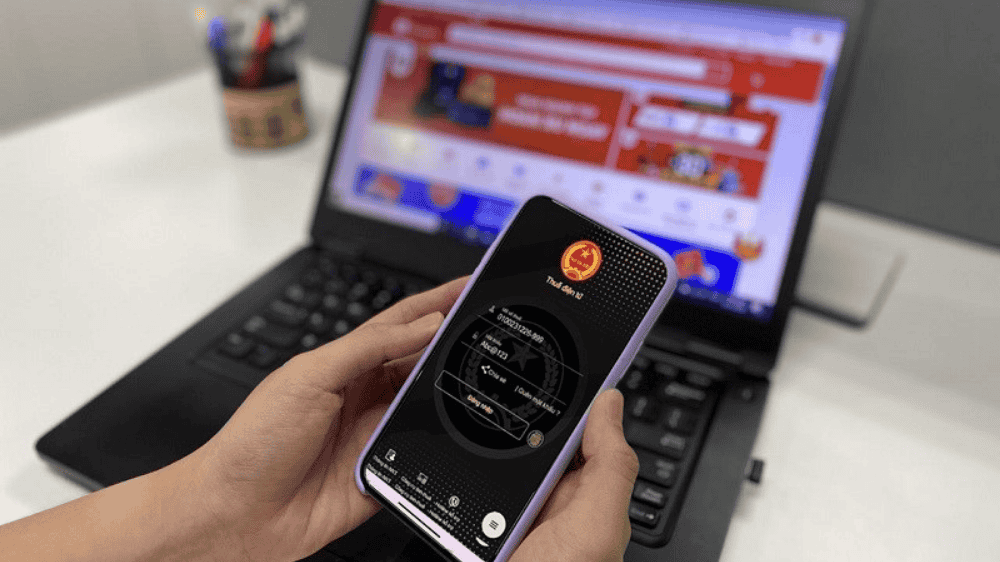
On the morning of April 24, 2023, the leadership of the General Department of Taxation and the leaders of the Tax Departments of provinces and centrally-administered cities held an online conference at 65 locations to announce the implementation of the "Database Analysis and Electronic Invoice Management System," chaired by Acting Director General of the General Department of Taxation Mai Xuan Truong.

Measures are needed to strengthen control over electronic invoice data.
The implementation of electronic invoices (e-invoices) has achieved positive results, with over 04 billion e-invoices issued to date. In accordance with the Tax Management Law, the Ministry of Finance has applied and implemented e-invoices nationwide, supporting businesses in their digital transformation, helping taxpayers fulfill their obligations to the state budget, creating transparency and equality, and contributing to improving the business environment in line with the goals of the Ministry of Finance and the Government.
However, with the increasing number of invoices, through inspection and monitoring, the General Department of Taxation has found that some organizations and individuals are still committing fraud in the issuance and use of electronic invoices to misappropriate tax revenue. Therefore, the tax authorities have had to strengthen control and apply modern techniques to analyze large datasets. To address this issue, the General Department of Taxation has deployed the Electronic Invoice Database Center, which helps analyze electronic invoice data and manage risks related to electronic invoices throughout the tax sector.
The system will provide tax officials with tools and data sources to compare electronic invoice data with tax declarations, assess the implementation and compliance with tax laws by taxpayers, thereby preventing and promptly handling cases of invoice violations as well as fraudulent acts, tax evasion, and incorrect value-added tax refunds, contributing to improved tax management efficiency.
Data comparison and identification of suspected areas
A key highlight of the electronic invoice database center recently announced by the General Department of Taxation is its ability to analyze massive amounts of data, serving the risk management of electronic invoices throughout the tax sector.
The function of comparing e-invoice data with tax returns.This feature helps to automatically compare and contrast the data from electronic invoices with tax returns, starting 5 days after the deadline for filing. Through this, tax officials can create a list of taxpayers with discrepancies between the declared value and the actual invoice value. This allows them to take appropriate action, such as conducting on-site inspections, audits at the taxpayer's premises, or referring the case to the investigative agency if necessary, to assess the taxpayer's compliance with the law.
This function assesses the taxpayer's invoice usage during the month.Tax authorities can conduct a data assessment of taxpayers at the end of each month. The data monitored by the tax authorities includes information related to the taxpayer such as establishment date, legal representative, registered capital, etc.; data on invoices purchased and sold by the taxpayer during the month; or comparisons of invoice data from consecutive periods to identify sudden changes, thereby enabling timely and appropriate management measures.
Assessment based on a set of risk criteria for invoices.
To facilitate the analysis and assessment of taxpayers with risk indicators in invoice management and usage, the General Department of Taxation has issued Decision No. 78/QD-TCT on the set of indicators and criteria for assessing invoice risks, which includes the following three groups:
- Group 1: This group includes tax authorities that identify taxpayers who have switched from using electronic invoices without a tax authority code to using electronic invoices with a tax authority code.
If a taxpayer shows signs of risk falling under this group of criteria, the taxpayer must switch from using electronic invoices without a code to electronic invoices with a code issued by the tax authority.
- Group 2: This group consists of tax authorities that identify taxpayers with signs of risk and require them to review and inspect the management and use of invoices.
This is the CSTC group that applies a scoring and risk ranking method. Based on this, the Tax Authority will select a number of taxpayers to create a list of taxpayers that need to be reviewed and inspected to identify violations related to invoices in particular and tax violations in general.
- Group 3: This group consists of reference guidelines for identifying taxpayers with risk indicators who must review and inspect their invoice management and usage.
If a taxpayer shows signs of risk falling under one of these risk assessment categories, the taxpayer will be selected to be included in the list of taxpayers requiring review and inspection without going through a risk scoring process.
Applying artificial intelligence technology to invoice management.
The General Department of Taxation will apply artificial intelligence technology to natural language analysis to identify invoices for the same type of goods, thereby easily detecting invoices with unusual purchase and sale prices. By analyzing billions of invoices with diverse goods and services, the tool will help tax authorities filter key items for in-depth analysis when needed.
Through inspections, the General Department of Taxation has revealed that many cases of tax refund fraud through exports have involved inflating invoices by tens of times. Controlling erratic buying and selling prices helps to identify cases requiring monitoring and prevent tax refund fraud in a timely manner.
Chain analysis systems using Bayesian network technology can identify business chains that engage in transactions involving the purchase and sale of similar goods, thereby tracing the origin of goods and the added value between stages. Based on this, tax authorities can identify chains with unusual characteristics such as identical starting and ending points, chains that only involve buying without selling, chains where many businesses have abandoned their business locations, etc., in order to promptly detect potentially illegal invoice trading transactions. This allows for in-depth analysis and inclusion in inspection and audit plans if any anomalies are detected.
The tax authorities will combine analysis of the risky goods purchase chain with businesses at the end of the chain that request large refunds to detect suspected cases of tax refund fraud.
"The establishment of the Electronic Invoice Database Center helps tax authorities promote the application of big data analytics and artificial intelligence (AI) to manage taxes and invoices, contributing to the control and rapid detection of taxpayers who commit invoice fraud," Acting Director General of the General Department of Taxation Mai Xuan Thanh stated at the conference.
By focusing on analyzing and reviewing data related to electronic invoices, tax authorities can quickly detect cases of tax fraud, ensuring fairness and transparency in business operations.
At the same time, the Tax Department continues to raise awareness and warn businesses about the use of illegal invoices. By closely coordinating with relevant agencies, the Tax Department hopes to prevent and deter the abuse of electronic invoices early and proactively. All these efforts will contribute to creating a healthy and equitable business environment for the business community and taxpayers.