1. Operating a business involves facing numerous control risks.
These are risks arising from the absence of a company's control system, or from its incomplete or improper implementation, leading to potential risks.
Factors influencing control risk include:
- Controlled environment
- Process system
- Staff qualifications
- Organizational issues
- New business processes have emerged and have not yet been standardized.
- The process is not appropriate or complete.
- The sequence in the control process is inappropriate and fails to mitigate risks.
2. The Essentiality of Business Management Through Processes
The application of current process-based business management is widespread globally, particularly in banking and large enterprises, and is a subject taught in MBA programs worldwide.
3. Implementing Process-Based Management brings 5 sure benefits.
- Enhancing transparency in operations and bringing that transparency to customers as a form of marketing through the way products and services are delivered.
- Identifying bottlenecks in business processes is crucial, as these bottlenecks often slow down and obstruct the entire process. Applying BPM helps pinpoint these bottlenecks and provides a database for effectively resolving them.
- It helps optimize business processes and improve existing business processes.
- Reduce on-the-job training time to a minimum.
- Clearly define the roles and responsibilities of people within the business.
Through managing business processes, the director can:
- Managing a business through processes.
- Proper and efficient staffing arrangements.
- Improve customer satisfaction
- Develop new products and services in the shortest time and at the most reasonable cost.
- Increase competitive advantage
- Reduce management costs. Increase profits.
4. Factors contributing to the success of process-based business management.

Developing synchronized elements is crucial and determines the success of business management. Any imbalance leads to waste, difficulties in implementation, cumbersome paperwork, and superficial execution.
5. Incomplete models are more likely to fail.


6. Process lifecycle in businesses
The process of a business with a lifecycle has been modeled as follows:

7. The relationship between processes and business objects

8. Essential business processes that need to be established.
- Money process: Cash, Bank deposit
- Sales and Accounts Receivable Process
- Purchasing and Accounts Payable Process
- Inventory management process
- Production Costing Process (Continuous)
- Costing process for construction projects and works.
- Asset and equipment management procedures
- Salary and social insurance procedures
- Business capital management process
- General Accounting Process
- The process of preparing financial statements.
- Tax review process
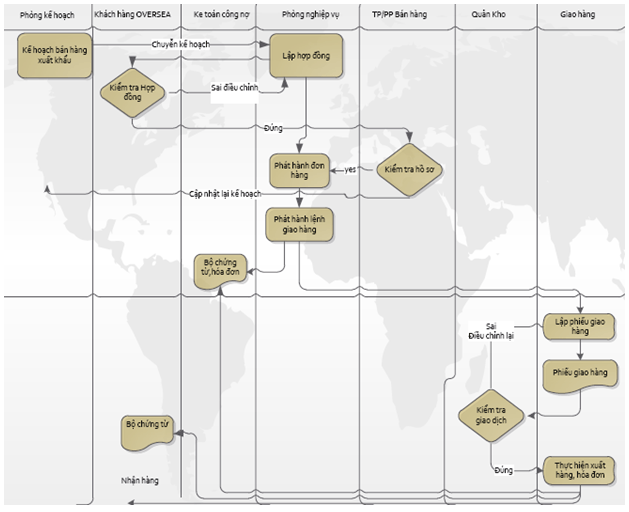
9. Specific forms of the Sales – Cash Collection process
Expertis now offers the service Establishing an accounting and tax system. for businesses.
For further information, please see the other services offered by EXPERTIS.