Have you ever experienced the panic of rummaging through stacks of accounting files only to find the document you need? For accountants and small business owners, organizing records is not just a daily task but also directly impacts work efficiency and legal compliance. Many underestimate this task, but as the number of documents increases, a lack of organization turns everything into a major challenge. A well-organized storage system not only saves time but also provides confidence during unexpected audits.
You're not alone if you're wondering how to organize your accounting documents efficiently and make them easy to find. In fact, many businesses, large or small, struggle with managing their books. This not only impacts efficiency but also poses risks when needing to provide information quickly to partners, clients, or authorities. So how can you transform that messy pile of paperwork into an easily searchable document repository?
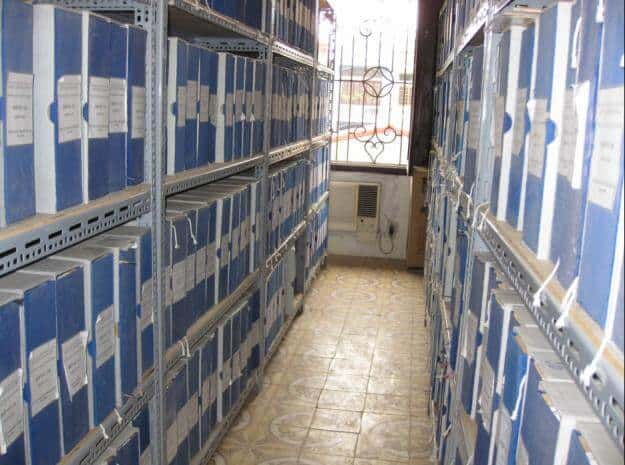
– Accounting documents must be fully and securely preserved by the accounting unit during use and storage.
– In cases where accounting documents are temporarily seized or confiscated, a record must be included along with photocopies of those documents; if the accounting documents are lost or destroyed, a record must be included along with photocopies of the documents or a confirmation.
– Accounting documents must be archived for a period of 12 months from the end of the accounting year or the completion of the accounting work.
– The legal representative of the accounting unit is responsible for organizing the preservation and storage of accounting documents.
– Accounting documents must be retained for the following periods:
- At least 05 years old for accounting documents used for the management and operation of the accounting unit, including accounting vouchers not directly used for recording accounting entries and preparing financial statements;
- At least 10 years for accounting documents used directly to record accounting entries and prepare financial statements, and for annual accounting books and financial statements, unless otherwise provided by law;
- Permanent archiving of accounting documents is essential for historical data and holds significant economic, security, and national defense importance.
– The government specifies each type of accounting document that must be stored, the storage period, the time of calculation of the storage period as stipulated in Clause 5, Article 41 of the 2015 Accounting Law, the storage location, and the procedures for destroying stored accounting documents.
Register as a member to receive priority access to the latest guides on accounting, taxation, business management, and work skills.
For further information, please see the other services offered by EXPERTIS: