
Current regulations require accounting to reflect the business operations and economic transactions of enterprises in compliance with Vietnamese Accounting Standards and the current Enterprise Accounting System.
However, the current reality is that most accountants are not applying Accounting Standards or the Corporate Accounting System for accounting purposes, but are mainly relying on tax regulations to reflect and present information in financial statements.
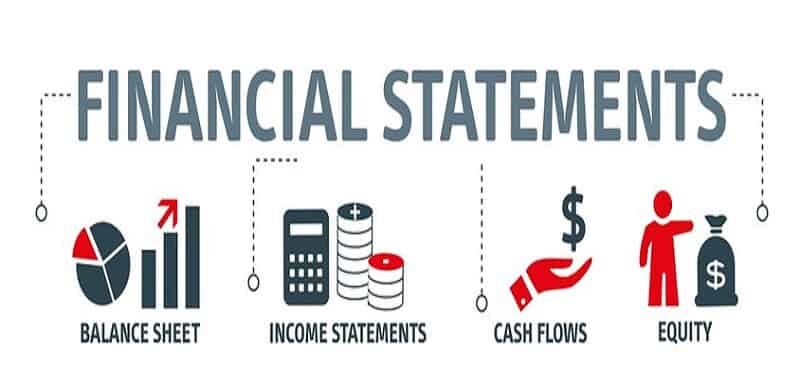
1. Regulations regarding the duties of an accountant
Based on Articles 4 and 5 of the Accounting Law, Law No. 88/2015/QH13 dated November 20, 2015, clearly stipulates the duties and requirements for accountants as follows:
Article 4. Accounting duties
- Collecting and processing accounting information and data according to the subject and content of accounting work, as follows: accounting standards and accounting system.
- Inspect and monitor financial revenues and expenditures, collection and payment obligations, and debt settlements; inspect the management and use of assets and sources of asset formation; detect and prevent violations of financial and accounting laws.
- Analyzing accounting information and data; advising and proposing solutions to serve the management and economic and financial decision-making requirements of the accounting unit.
- Provide accounting information and data as required by law.
Article 5. Accounting Requirements
- Ensure that all economic and financial transactions are fully reflected in accounting documents, accounting books, and financial statements.
- Timely and accurate reporting of accounting information and data within the prescribed timeframe.
- Clearly, understandably, and accurately reflect accounting information and data.
- To reflect the current situation truthfully and objectively. the nature of the matter, the content and value of economic and financial transactions.
- Accounting information and data must be continuously reflected from the time of occurrence to the completion of economic and financial activities, from the establishment to the cessation of operations of the accounting unit; accounting data for the current period must follow the accounting data of the previous period.
- "Classify and organize accounting information and data in a systematic, orderly, comparable, and verifiable manner."
2. Why are accountants so concerned about tax regulations?
2.1. Due to misunderstandings about the function of Accounting and Tax Standards
Accounting standards comprise fundamental accounting regulations and methods for preparing financial statements. Therefore, financial statements must be prepared and presented in accordance with the provisions of Accounting Standards and the Corporate Accounting System as stipulated by the Accounting Law. The preparation and presentation of financial statements must ensure that they accurately reflect the essence of the transaction rather than its form or name.
A tax is a mandatory financial charge or some other type of tax levied on a taxpayer (an individual or legal entity) that must be paid to a government organization to fund various public expenditures.
Because of these functional differences, taxation is not used to guide accountants in preparing and presenting financial statements, but rather to provide regulations for tax management and to prevent tax revenue losses for the State. However, accountants are not yet accustomed to using Accounting Standards as a guide for accounting and accurately reflecting the nature of issues arising in their work.
2.2. Due to fear of responsibility and penalty risks.
Despite existing regulations and penalties, non-compliance with financial statement presentation rules has not been sufficiently deterrent. Conversely, any tax violation immediately results in penalties and enforcement actions, potentially impacting the company's operations. This leads to accountants feeling pressured by tax regulations when reflecting transactions on financial statements.
Any wrongdoing is subject to sanctions, but those that have an immediate, clear, and direct impact on the business are always what businesses want to avoid the most. That's not to say that accounting penalties don't exist; they still exist and are present in the books, just as risks remain and don't disappear over time.
2.3. Due to insufficient attention from business managers.
Managers who haven't yet recognized the true role and importance of financial statements will delegate the responsibility to the accounting department, as long as tax compliance is ensured. However, financial statements are a true reflection of a company's business performance, attracting investors and enhancing the company's reputation.
A financial report intended solely for tax purposes is no longer a true financial report. The information presented in such a report is no longer a basis for business managers and administrators to make informed business decisions, nor is it the accurate information that investors want to see.
3. The benefits of the right mindset in accounting.
Simultaneously complying with accounting standards and regulations, as well as tax regulations, is not difficult at all. However, to achieve this, accountants first need to clearly separate the scope and functions of the standards and the tax regulations.
Financial reports that comply with both accounting and tax regulations provide businesses with great peace of mind and boost the confidence of accountants. Businesses then feel truly confident in the data they provide to third parties, and accountants feel confident in the figures they present in the reports.
From there, businesses are always prepared for any investment opportunity, any important decision, and any source of foreign capital. They don't waste time struggling with the problem of ensuring accurate and appropriate accounting records, or explaining justifications. To achieve these results, it all begins with the right mindset about financial reporting and the accounting profession today.
Vietnam is a destination for a large influx of foreign investment. Transparent financial reporting, adherence to standards, and reflecting substance rather than form are key ways for businesses to quickly access these capital sources.