
Do services like hair washing, haircutting, laundry, and selling pho (Vietnamese noodle soup) need to issue electronic invoices generated from a cash register? Household businesses are wondering what to do about previously purchased goods without input invoices. Will they be subject to back taxes if revenue increases significantly after switching to tax declaration?
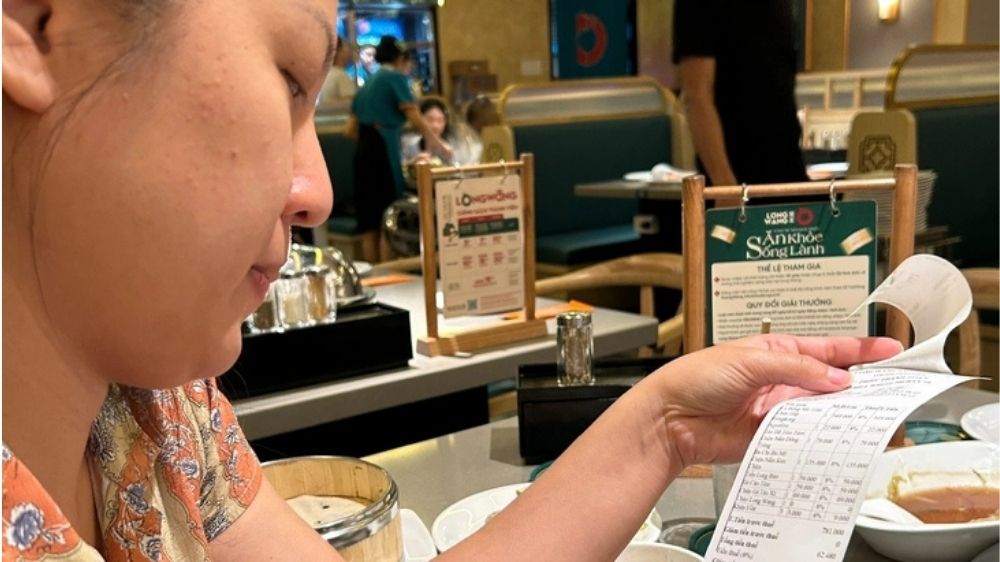
These were the concerns and worries that business households (HKD) submitted and were addressed by the leaders of the Tax Department and invited guests, who were tax experts, at an online exchange organized by Tuoi Tre newspaper on the morning of June 12th.
❓ How do you handle goods without an invoice?
The biggest concern for household businesses is how goods imported before June 1, 2025, but without electronic invoices will be handled. A representative from the Tax Department stated that household businesses and individuals need to ensure they store invoices and documents for purchased goods and services as required by regulations, in order to provide them to other state management agencies when requested, ensuring the origin and quality of the goods.
Ms. Nguyen Thi Cuc, president of the Vietnam Tax Consulting Association, stated that according to current regulations, purchased goods must have legal invoices and supporting documents to determine their origin. However, during the transition from the lump-sum tax system to the declaration tax system, there have been instances where households have inventory without complete and legal invoices.
To address the difficulties during the transition period harmoniously, Ms. Cúc proposed a suitable solution. Accordingly, households must review their entire inventory, exclude all goods of illegal origin, including counterfeit goods, smuggled goods, and stolen goods (if any), and dispose of them from goods intended for sale.
"When switching to tax payment based on declaration, households will pay taxes on actual sales revenue. Therefore, in my opinion, the tax authorities should not pursue cases of inventory lacking invoices and documents, except for illegal goods as excluded above," Ms. Cúc proposed.
Besides the problem of unsold inventory without invoices, many household businesses are also worried about being subject to retroactive tax collection from previous years. According to Ms. Cúc, in cases where household businesses pay taxes using the lump-sum method, if revenue changes by 50% or more, the tax authorities will adjust the lump-sum tax rate according to the revenue in the transition year. In cases where household businesses pay taxes using the declaration method, they determine their own revenue and pay taxes according to the prescribed rate.
The tax authorities will conduct inspections and audits to collect back taxes if any signs of tax evasion are detected. Starting from June 1, 2025, household businesses must issue invoices according to the new regulations. This will result in situations where the actual revenue on invoices is greater than the revenue declared for tax purposes in previous years.
However, according to Ms. Cúc, in order to encourage household businesses to voluntarily switch to declaring taxes based on actual revenue, the issue of collecting back taxes paid in previous years should not be raised, except in cases of serious violations aimed at tax evasion or fraud.
Speaking to Tuoi Tre newspaper, Ms. Dinh Thi Thuy, Vice Chairman of the Board of Directors of Misa Joint Stock Company, also suggested that the tax authorities should report and propose solutions to address the issue and support household businesses so they can operate with peace of mind.
"To reassure household businesses, I believe the policy should not retroactively apply the new revenue threshold to periods when the flat-rate tax system was in place," Ms. Thuy suggested.
🏢 When a business becomes registered, expenses can be deducted and losses can be carried forward for 5 years.
Many household businesses (HKD) have expressed concern that they are paying taxes on revenue without being able to deduct expenses before calculating tax, even though electronic invoices have been implemented and the purchasing and selling processes are now transparent. Meanwhile, despite having high revenue, the actual profit of many HKDs is very low. Therefore, many believe that tax policies and mechanisms for HKDs need to be revised soon to better suit small business operations.
Answering a series of questions on this issue, Ms. Nguyen Thi Cuc explained that the tax rate is based on the characteristics of each business sector. For example, wholesale and retail businesses have a high proportion of cost of goods sold, so the tax rate is low because it is calculated on the entire cost of goods purchased. Service activities such as accommodation, hair washing, haircutting, massage, etc., are taxed based on the service fees collected, so a higher tax rate is applied.
According to Mr. Nguyen Duc Huy, Deputy Head of the Tax Department (Tax Bureau), wholesale and retail sales of goods are subject to a tax rate of 1.5% (1% value-added tax, 0.5% personal income tax); accommodation, sauna, massage, tailoring, laundry, haircutting, and hair washing services are subject to a tax rate of 7% (1% value-added tax, 0.5% personal income tax)... Value-added tax is paid by the consumer. Household businesses only collect and remit the tax on behalf of their customers.
"To address the issue of tax calculation based on revenue, household businesses should convert to enterprises to pay value-added tax using the deduction method. They should pay corporate income tax using the method of revenue minus expenses, including: cost of goods purchased, rent, labor costs, electricity and water bills, marketing and advertising expenses, employee training costs, etc.," Ms. Cúc suggested.
In case of business losses, enterprises will not have to pay corporate income tax and will even be able to carry forward losses for 5 years. If profitable, enterprises will be exempt from corporate income tax for small and medium-sized enterprises for 3 years. Furthermore, according to the draft of the revised Corporate Income Tax Law, depending on revenue, small and medium-sized enterprises will only pay corporate income tax at a rate of 15-17%.
"Regarding accounting and invoicing regulations for micro-enterprises transitioning from household businesses, the accounting for small and micro-enterprises will be simpler. The government will provide free digital platforms and shared accounting software for small, micro, and household businesses. Clearly, the benefits for businesses are very practical," Ms. Cúc affirmed.
🤔 Who is responsible for issuing the invoice?
In a letter sent to Tuoi Tre newspaper, representatives from many household businesses providing services such as hair washing, intercity bus services, and rice sales asked whether they are required to use electronic invoices generated from cash registers and how to issue them. Responding to this question, Mr. Mai Son, Deputy Director of the Tax Department, stated that according to Decree 70/2025, from June 1st, household businesses and individual businesses with annual revenue exceeding 1 billion VND and providing goods directly to consumers must use electronic invoices generated from cash registers.
With this level of revenue, these are households with relatively large business scales. According to tax statistics, the number of households required to apply this nationwide is 37,000, accounting for just over 1% of the total number of households. Households paying taxes through the declaration method have been using electronic invoices generated from cash registers since 2022. This electronic invoice policy has been implemented for more than three years, not just recently.
To date, approximately 38,000 households nationwide have adopted electronic invoices generated from cash registers. This means that many households not yet included in the policy's implementation target still possess the necessary technological infrastructure and equipment, and have therefore adopted the system. Importantly, many households have found that using electronic invoices generated from cash registers improves their business management.
According to Ms. Nguyen Thi Cuc, small-scale household businesses with annual revenue of 100 million VND or less will be exempt from all taxes in 2025. From January 1, 2026, the tax-exempt revenue threshold for these businesses will increase to 200 million VND per year. "When applying the tax declaration method to household businesses with annual revenue exceeding 1 billion VND, the tax rate will be calculated as a percentage of revenue, depending on the industry," Ms. Cuc stated.
Article source: Tuoi Tre Online Newspaper