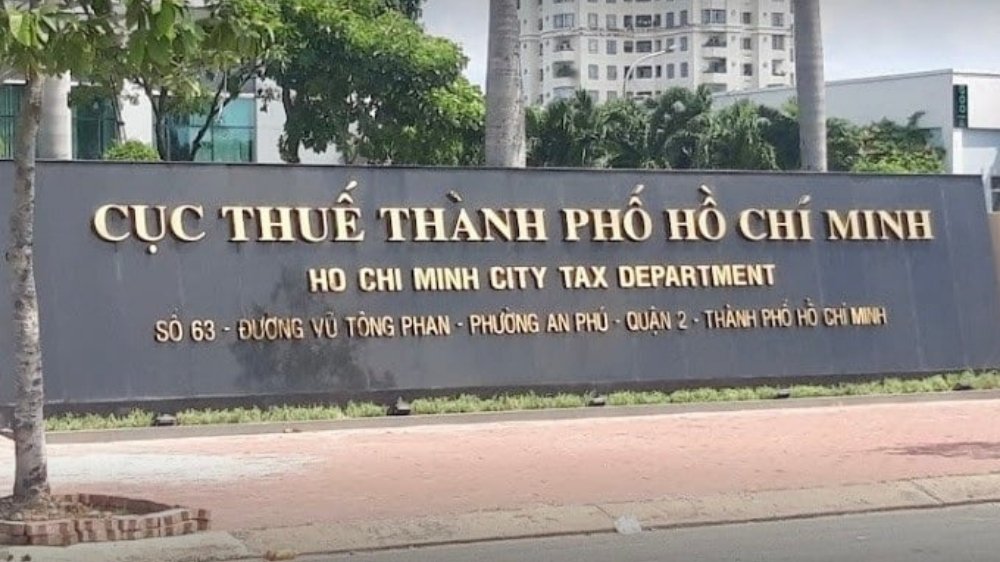
In recent days, the incident involving several lecturers who were unexpectedly ordered by the Ho Chi Minh City tax authorities to pay back hundreds of millions of dong in personal income tax for many years has caused a stir in public opinion.

According to Dr. Le Quang Dung, lecturer at the Institute of Accounting and Auditing (National Economics University), the lecturers subject to tax recovery are those who... They have multiple sources of income but do not consolidate them at the end of the year to settle their personal income tax.
If the income generated is substantial, the amount of tax provisionally withheld may be lower than the amount payable, and the tax rate may be higher than the 10% withheld. When applying the 10% withholding tax, taxpayers must receive a personal income tax withholding certificate to determine the amount of personal income tax provisionally paid. In the final tax settlement, the amount of tax payable is determined by subtracting the tax already paid from the total income.
The situation regarding the recovery of funds arises from the fact that these lecturers, when settling their accounts, did not account for the additional income and also lacked tax deduction certificates as proof.
In fact, besides income from teaching at the school, lecturers also have other sources of income from writing books, articles, and guest lecturing. Before paying their income, the institutions deduct 10% personal income tax.
Believing they had paid all their taxes in full, at the end of the year they only authorized the school to handle the tax settlement for their income from the school. Furthermore, they had never received any notification or reminder about the underpayment of personal income tax.
Therefore, when they received notices demanding back taxes on personal income for six years (from 2014 to the present) amounting to several hundred million dong, with nearly half of that being penalties and late payment fees, they were truly bewildered.
Why did the tax authorities not collect the arrears immediately over the years, but instead waited for so many years to do so?
In response to this issue, the General Department of Taxation stated that the Law on Tax Administration stipulates that taxpayers self-declare and are responsible before the law. If they violate the law, in addition to recovering the unpaid tax amount, they will also be fined for late payment.
Legal grounds:
- Circular 156/2013/TT-BTC and Circular 92/2015/TT-BTC clearly stipulate that in cases where a resident individual taxpayer has multiple sources of income from salaries and wages and has additional tax payable, They are responsible for filing their personal income tax return.
- Article 10 of Government Decree 129/2013/ND-CP dated October 16, 2013 stipulates that in cases where taxpayers make incorrect declarations resulting in a shortfall in tax payable, which is discovered by the tax authorities during an inspection, in addition to being penalized for paying the full amount of the shortfall and late payment interest to the State budget, they will also be subject to penalties. Penalties for providing false information.
Over the past period, to ensure taxpayers are aware of and proactively fulfill their obligations, tax authorities at all levels have regularly disseminated information to the public through various means regarding personal income tax policies. The majority of taxpayers have complied well with the regulations on declaring and paying personal income tax.
According to lawyer Pham Quang Xa (Hanoi Bar Association), if taxpayers with multiple sources of income are only required to pay back taxes for one year and fined for one year, they will certainly voluntarily settle their taxes in subsequent years instead of waiting for the tax authorities to send a notice. If the back taxes are collected early, the state budget will receive taxes sooner, and taxpayers will not be heavily penalized.