
Indonesia is Vietnam's most formidable competitor, excluding the infrastructure criterion.
According to an analysis by Mr. Hong Sun, Vice President of the Korean Chamber of Commerce in Vietnam (KORCHAM), Indonesia has many advantages with its population of 250 million, creating a large and competitive labor force. On the other hand, the number of people in Indonesia's middle and upper classes is also much higher than in Vietnam, making it a potential market for many goods.
Furthermore, Indonesia possesses abundant natural resources, including various minerals such as coal and oil. The country also has a large area of tropical rainforest. The Indonesian government is also very open to attracting investment, offering many tax incentives for foreign businesses.
Professor Nguyen Mai, Chairman of the FDI Business Association in Vietnam, added that Indonesia is one of the countries taking the strongest steps to attract shifting FDI flows.
In May, President Joko Widodo had a phone call with US President Donald Trump to encourage American businesses to move their production lines to the archipelago nation.
Indonesia is also offering significant incentives, particularly in infrastructure. The country has planned to build 27 new industrial parks, including a project to prepare 5.000 hectares of land in Central Java province, inviting foreign businesses. The Indonesian government also aims to gradually reduce corporate income tax to 20% by 2023.
However, Mr. Hong Sun noted that Indonesia's infrastructure is complex due to the country being divided by so many islands. Some areas are quite developed, while others are underdeveloped. In contrast, he assessed Vietnam as having a more evenly developed infrastructure.
In terms of having the largest Japanese business community, Thailand is a formidable competitor to Vietnam.
According to Mr. Takeo Nakajima, Chief Representative of the Japan Trade Promotion Organization (JETRO) Office in Hanoi:
In terms of labor costs, Indonesia and the Philippines are currently comparable to Vietnam. Based on this criterion, these two countries would be the biggest competitors. If considering both cheap labor and good infrastructure, Laos and Cambodia would be considered. However, while Laos and Cambodia have cheaper labor, their infrastructure is not as good as Vietnam's. nIf Japanese businesses choose a location where they have already invested heavily, Thailand will be a formidable competitor to Vietnam.
Thailand prioritizes attracting investment in high-tech sectors such as aerospace, medical equipment, electric vehicles, or high-quality parts and components.
The bold investment attraction strategies of the Philippines and Malaysia.
The Philippines opted for tax cuts. The country swiftly reduced its corporate income tax (currently the highest in Southeast Asia at 30%) to 25% in July.
The Malaysian government even plans to send representatives to lobby around 60 multinational companies to open factories in Malaysia. The country has approved a $240 million support package over five years, focusing on tax reductions and financial assistance.
Mr. Takeo Nakajima stated that there are many perspectives on assessing a country's attractiveness to businesses. When deciding to invest in a country, businesses evaluate all factors comprehensively. However, Japanese businesses are highly valuing Vietnam.
As evidence, out of 30 businesses supported by the Japanese Ministry of Economy, Trade and Industry (METI) in diversifying their supply chains, 15 chose Vietnam. He further shared that Vietnam will be one of the places with a good business environment not only in the short term but also in the long term.
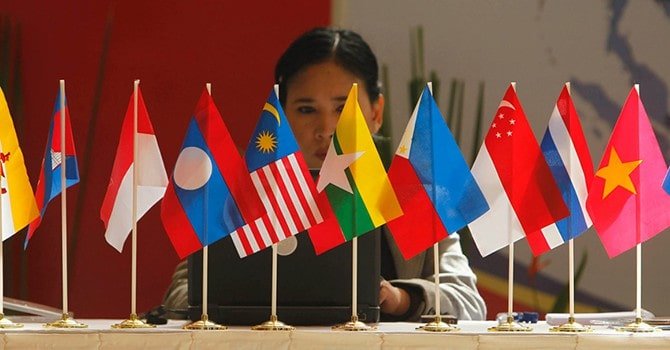
Vietnam is currently facing, and will continue to face, fierce competition from formidable rivals in the race to attract foreign investment. Some ASEAN countries were shocked when 15 out of 30 Japanese companies chose Vietnam, which will likely motivate other nations to work harder, and the competition promises to be even more intense.
Improve infrastructure, relax investment requirements.
Discussing Vietnam's strategy for attracting foreign investors, Mr. Hong Sun suggested that the Vietnamese government should continue to improve infrastructure and create a more favorable policy environment. This would help attract more businesses to invest and operate in the country.
Mr. Takeo Nakajima added that, in terms of institutions and policies, the Vietnamese government needs to listen more to the opinions of businesses in order to create a favorable and transparent environment.
Developing supporting industries and developing high-quality human resources.
Mr. Takeo Nakajima assessed that Vietnam's early control of the Covid-19 pandemic was an advantage and helped businesses restore production. With a population of nearly 100 million, Vietnam will be an attractive market now and in the future. Labor costs in Vietnam are also quite competitive compared to other countries in the region.
Vietnam's attractiveness compared to other ASEAN countries lies in its very high percentage of Japanese speakers, surpassing other countries. Therefore, Japanese businesses will consider this a "soft" advantage when investing.
To make it more attractive, the Head of the JETRO Hanoi Office suggested increasing Vietnam's localization rate by developing supporting industries. Simultaneously, developing a high-quality workforce is also crucial.


