A somber tone for "The Transfer Pricing Picture"
Ms. Huong Vu, Deputy General Director of Ernst & Young Vietnam, stated at the seminar that transfer pricing, market price, and transfer pricing, along with Vietnam's legal regulations on transfer pricing, always have two different aspects to the same issue. One is compliance with Vietnamese and international laws – the other is the abuse of transfer pricing to shift profits elsewhere.
Wayne Barford, a senior advisor at the Centre for International Tax and Investment and former Assistant Commissioner of the Australian Taxation Office, stated that: "Transfer pricing itself is not illegal. Only price manipulation or the abuse of transfer pricing for tax evasion purposes is illegal."
A negative perception of "transfer pricing" will create barriers for large investors to enter Vietnam.
Mr. Adam Sitkoff, Executive Director of Amcham Hanoi, spoke at the conference about concerns regarding the unfavorable and biased view of transfer pricing as a tool for tax evasion and a violation of the law, which will lead to many negative consequences and reduce Vietnam's attractiveness to large investors. This view is not unique to Vietnam but is quite common worldwide regarding the term "transfer pricing".
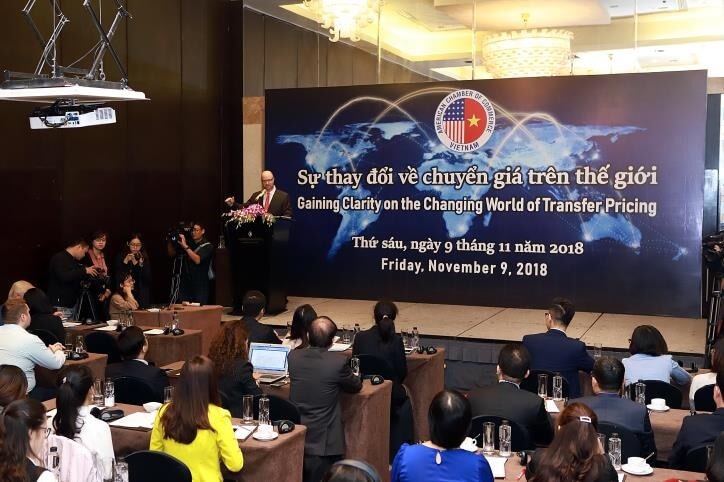
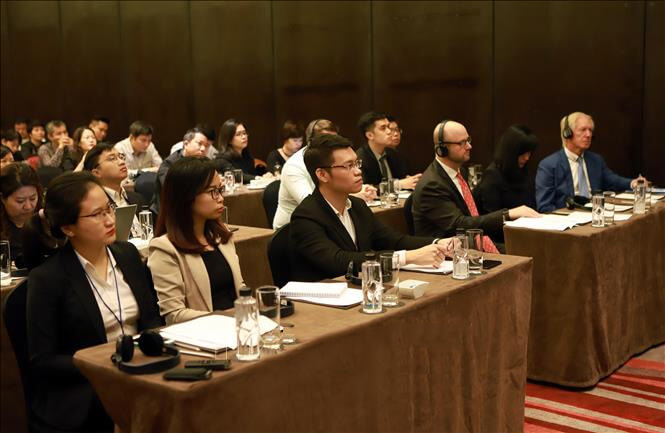
Seminar “Changes in Transfer Pricing Worldwide”
The seminar, organized by the American Chamber of Commerce (Amcham) on the morning of November 9th, aimed to create a forum for exchanging diverse perspectives from domestic and international experts on transfer pricing – an issue that has received much attention recently.
An expert with extensive experience in tax and transfer pricing issues states that: Transfer pricing is defined as the rules and methods for pricing internal transactions and transactions between businesses under the same ownership or control. Because cross-border related-party transactions can alter taxable income, tax authorities in many countries may apply pricing methods different from the usual methods based on market prices between independent businesses.
The transfer pricing landscape and a comprehensive view.
Related-party and cross-border transactions will become increasingly common, but an inappropriate and biased perception of these transactions, not suited to today's dynamic market, will create barriers and challenges for multinational investors when deciding to choose Vietnam as their next destination.
This is happening in the context of Vietnam's increasingly deep integration into the global economy.
Nguyen Van Toan, Vice President of the Association of Foreign Investment Enterprises, agrees with the above opinion. He hopes that the Vietnamese government in particular and the international community in general will have a more objective and comprehensive view of the business activities of these multinational corporations, especially regarding legitimate internal transactions between businesses within these corporations, avoiding unnecessary negative impacts on the investment environment in Vietnam.
Adam Sitkoff recommends that methods be developed to determine appropriate pricing for related-party transactions, including intangible, tangible, and financial service prices. The business practices of enterprises must be considered, and solutions should be found to create a fair tax policy between domestic and foreign businesses, limiting intentional transfer pricing that violates the laws of the host country.
Decree 2017
Thomas McClelland, General Director of Deloitte Vietnam Tax Consulting Co., Ltd., still points out some limitations and differences in the Decree that cause concern for taxpayers as well as tax consultants. He argues that when discussing transfer pricing, relevant parties should not only talk about profit margins and comparative analysis but also consider the actual business practices of enterprises. Accordingly, tax authorities need to have a clear understanding of the business practices of enterprises and take corresponding actions.
Decree 20/2017/ND-CP on tax management for enterprises with related-party transactions is essentially consistent with the recommendations in the European Economic Cooperation (OEEC) Action Programme on Base Erosion and Profit Shifting (BEPS).
McClelland analyzed, "Instead of selecting certain businesses for inspections, ensuring business compliance and using a method of determining market prices and subsequent adjustments based on a confidential database should be changed."
Ms. Nguyen Van Chi (representing the National Assembly's Finance and Budget Committee) further emphasized the need to clarify what constitutes legally compliant transfer pricing and what constitutes illegal transfer pricing, meaning transferring profits to locations with lower tax rates to avoid taxes.
In addition, Ms. Chi said that consideration should be given to making Decree 20/2017/ND-CP closer to OECD regulations, while also listening to opinions from experts both domestically and internationally.