Based on the content of the Action Program for Controlling Transfer Pricing Activities, tax authorities at all levels have conducted numerous inspections of related-party transactions and reached a common conclusion regarding the direction of determining taxable income for enterprises. Accordingly, there are some noteworthy regulations as follows:
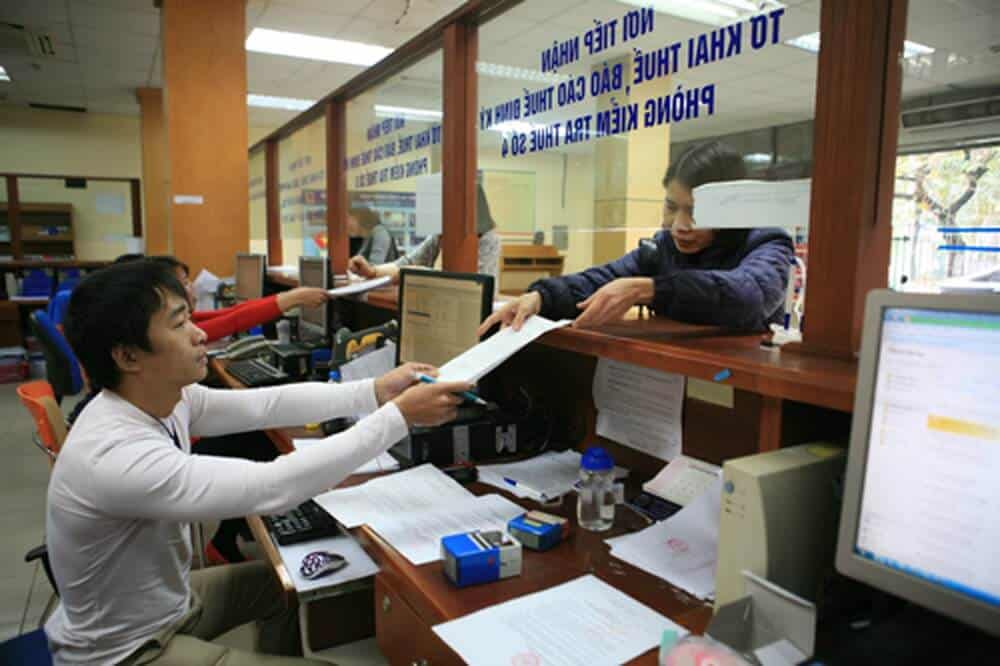
The tax authorities have the right to determine taxable income for businesses in the following cases (according to Clause 2, Part C, Circular 117 and Clause 2, Article 9, Circular 66):
1. Businesses that rely on illegal, invalid, or unverified documents, data, and records to determine prices, gross profit margins, or other profitability ratios applicable to related-party transactions will be considered to have "unreliable" information sources.
2. Businesses that create fraudulent independent transactions, or convert related-party transactions into independent transactions to use these as independent transactions selected for comparison.
3. Enterprises that fail to declare, or declare incompletely, Appendix 1-GCN/CC for related-party transactions arising in the corporate income tax year; and fail to comply with the deadline for providing information, data, and documents to substantiate the declaration and accounting of market prices for related-party transactions.
4. In cases where the tax authority suspects that the enterprise is not applying or is intentionally violating the regulations in the Circular, and the enterprise fails to provide proof within a maximum of 90 days from the date of receiving the notification from the tax authority.
Therefore, tax assessment is only applied to businesses that do not submit Form 01, or do not present market price determination documents when requested by the tax authorities. Naturally, businesses that have submitted Form 01 and prepared market price determination documents in accordance with regulations will not be subject to tax assessment.
However, the tax authorities can still adjust (but not fix) the transfer price in related-party transactions of a business after the inspection, evaluation, and conclusion regarding compliance with the market price principle of the documentation.
The records must be created at the time the transaction takes place and updated throughout the transaction. According to regulations, when requested in writing by the tax authorities, businesses must provide these records within 30 working days from the date of receiving the request from the tax authorities.
Businesses must comply with the following procedures: declare and submit information on related-party transactions annually according to the prescribed form (Appendix 1-GCN/CC, abbreviated as Form 01) and create and maintain records of market price determination to prove that related-party transactions comply with market price principles.
In reality, most businesses often use "unreliable data" in their market price determination records. Therefore, at the end of the inspection, the tax authorities still issue decisions to determine taxable income for businesses in such cases.
Accordingly, the tax authorities will review and select companies with similar operational functions to foreign enterprises operating in multiple countries (with significant differences that may affect profit margins, such as differences in labor costs, management costs, delivery terms, economic conditions, etc.) for comparison in the market price determination report.
Regulations regarding "Selection of data and documents"
According to Clause 1, Article IV, Part B, Circular 117 and Clause 1, Article 7, Circular 66, it is stipulated that:
1.1. The data, documents, and materials used as a basis for comparative analysis must clearly state their origin so that the tax authorities can check and verify them. Businesses may use information and data from the following sources:
a) Information and data are publicly disclosed or provided upon request by state agencies, departments, research institutes, associations, and specialized organizations recognized and responsible to the State;
b) Information and data confirmed or publicly disclosed by organizations and individuals operating in the field of independent professional services that are licensed to operate (for example: independent auditing agencies, registration and quality inspection agencies, organizations classifying and evaluating the reputation of businesses);
c) Annual or periodic financial statements and investment reports of companies listed on the stock market are publicly disclosed in accordance with the regulations and operating rules of the stock market;
d) Data, documents, and records related to business transactions used for tax declaration purposes are provided and the responsibility of the enterprise. Data, documents, and records originating from unofficial or unknown sources are for reference only.
Specifically:
According to clause a, information and data must be publicly disclosed or provided upon request by agencies, research institutes, associations, and specialized organizations recognized by the State and for which they are responsible.
According to clause b, information and data may be provided by businesses that provide commercial databases, including the financial data of businesses. Data from these sources must satisfy the "reliability" requirements as stipulated.
According to clause c, businesses can use financial statements and annual reports of listed companies. This data is usually available on the websites of listed companies and stock exchanges in Vietnam and other countries in the region. Data from these sources also meets the "reliability" requirements as stipulated.
According to clause d, a business may use its own internal data, meaning its own transactions with one or more independent parties. That is, when selecting independent transactions for comparison, a business should prioritize its own independent transactions, provided that these independent transactions were not created or transformed from related-party transactions.
After a compliance check, the tax authorities may adjust the transfer price of a business in related-party transactions, or may not impose an assessment. In cases where a business does not comply with the regulations in Circular 117 and Circular 66, its taxable income will be assessed. If the tax authorities disagree with the business on technical issues in applying market pricing regulations, the adjustment may be necessary.
In short, the results of a transfer pricing audit should be consistent with the company's compliance with market pricing regulations and its specific circumstances, rather than being based on profit margins previously imposed by the tax authorities.